
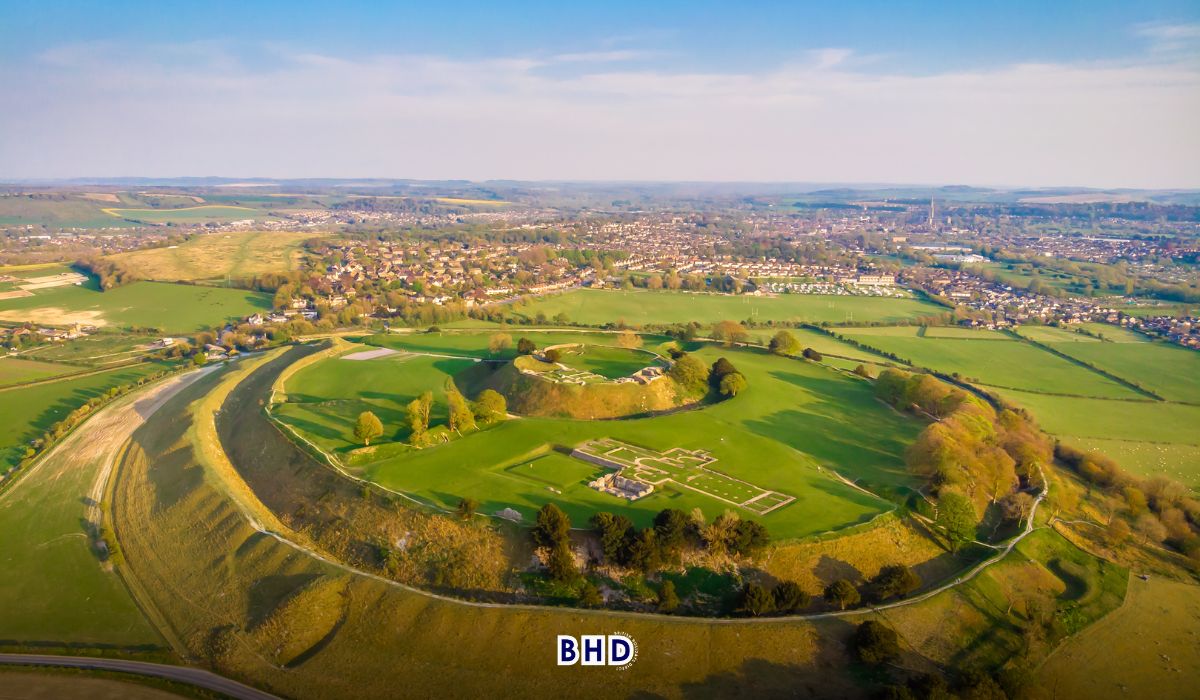
Perched on a hilltop north of Salisbury, Old Sarum tells a tale that stretches back over two millennia. This remarkable spot has worn many hats through the ages – Iron Age fortress, Roman settlement, Saxon stronghold, Norman powerhouse, and medieval cathedral city.
As you approach the site, the first thing that strikes you is its sheer scale. Those massive earthwork ramparts, first carved out in the Iron Age around 400 BC, still command respect after all these centuries. The ancient engineers who built them knew what they were doing – these walls have outlasted empires.

The Romans clearly thought they were onto something good when they arrived, setting up shop and making Old Sarum (or Sorviodunum, if you’re feeling fancy) an important local centre. But it was the Normans who really left their mark. Climb up to where their castle once stood, and you’ll understand why they chose this spot. The views across the Wiltshire countryside are absolutely stunning – on a clear day, you can see all the way to Salisbury Cathedral, which, ironically, is part of the reason Old Sarum eventually fell from grace.
Speaking of cathedrals, the foundations of Old Sarum’s original cathedral still trace their outline on the ground. If you stand within them it’s easy to imagine the soaring walls and spires that once reached for the heavens. Built in the 11th century, it must have been quite a sight. But life at the top wasn’t always easy – the exposed location meant that when the wind howled (as it still does), the noise was so loud priests couldn’t hear themselves sing. That, along with a rather inconvenient water shortage and some political squabbles, eventually led them to pack up and move down to where Salisbury Cathedral now stands.

We recommend giving yourself a good couple of hours to explore properly. Wear sturdy shoes – the ground is uneven in places, and you’ll want to scramble up and down the ramparts for the best views. The site is exposed to the elements, so pack according to the weather. A sunny day is glorious, but even in the mist, there’s something magical about this place.
Start your visit at the small but informative visitor centre, where you can pick up a guide to help make sense of what you’re seeing. Then take your time wandering the site. Recent archaeological work has revealed the medieval street pattern, so you can quite literally walk the same paths as people did centuries ago.
Bring a picnic if you can – there are some spectacular spots to sit and soak up both the view and the history. Just imagine having lunch in the same place where kings once held court and bishops planned their grand new cathedral.

Here’s a handy tip – if you’re planning to visit Salisbury Cathedral too (and you really should), start your day at Old Sarum. It adds a whole new dimension to your cathedral visit when you’ve stood in the place they left behind. The site is easy to find, just two miles north of Salisbury off the A345, with a paid car park on site.
Old Sarum even has a peculiar political claim to fame. Long after most people had moved away, it continued to elect two members to Parliament, becoming what was known as a “rotten borough.” Imagine that – a nearly deserted hilltop having the same parliamentary representation as a major city!
The site opens at 10 am and closes at 4 pm (except Christmas Day). There’s an admission fee unless you’re an English Heritage member, but it’s worth every penny for the slice of history you get to experience.
From its days as a bustling Iron Age community to its time as a powerful Norman centre, and even its rather amusing afterlife as a parliamentary constituency with more sheep than voters, Old Sarum has played many roles in Britain’s story. It’s a place where you can literally walk through layers of history, each footstep taking you further back in time.
So come and explore this remarkable survivor. Climb its ancient ramparts, wander its empty streets, and let your imagination fill in the gaps. Just watch out for that wind – it’s been catching people by surprise for over 2,000 years!


